Compare Oura Ring 4 with AI Wearables alternatives
Explore patterns in my daily data. Compare the complete setup, developer access and trade-offs before choosing your first build.
Oura Ring 4
Start here for a private journal or dashboard built from synchronized sensor-derived records. Our proposed weekly reflection page distinguishes a numeric score, a null value and an absent day before offering an optional reflective question. It is a data-integration project.
Choose a camera or voice wearable for capturing what you see or say. Oura’s cloud API is not a raw optical-sensor stream or a way to install your own model on the ring. The proposed journal does not provide diagnosis or establish why a score changed.
Hardware facts link to manufacturer documentation. Build fit is our editorial assessment. The linked hardware experiments are still unrun; synthetic code checks do not establish accuracy, speed, battery life or reliability on these devices.
Compare the whole build
Choose two products, or add a third. On a small screen, swipe across the table.
| What matters | 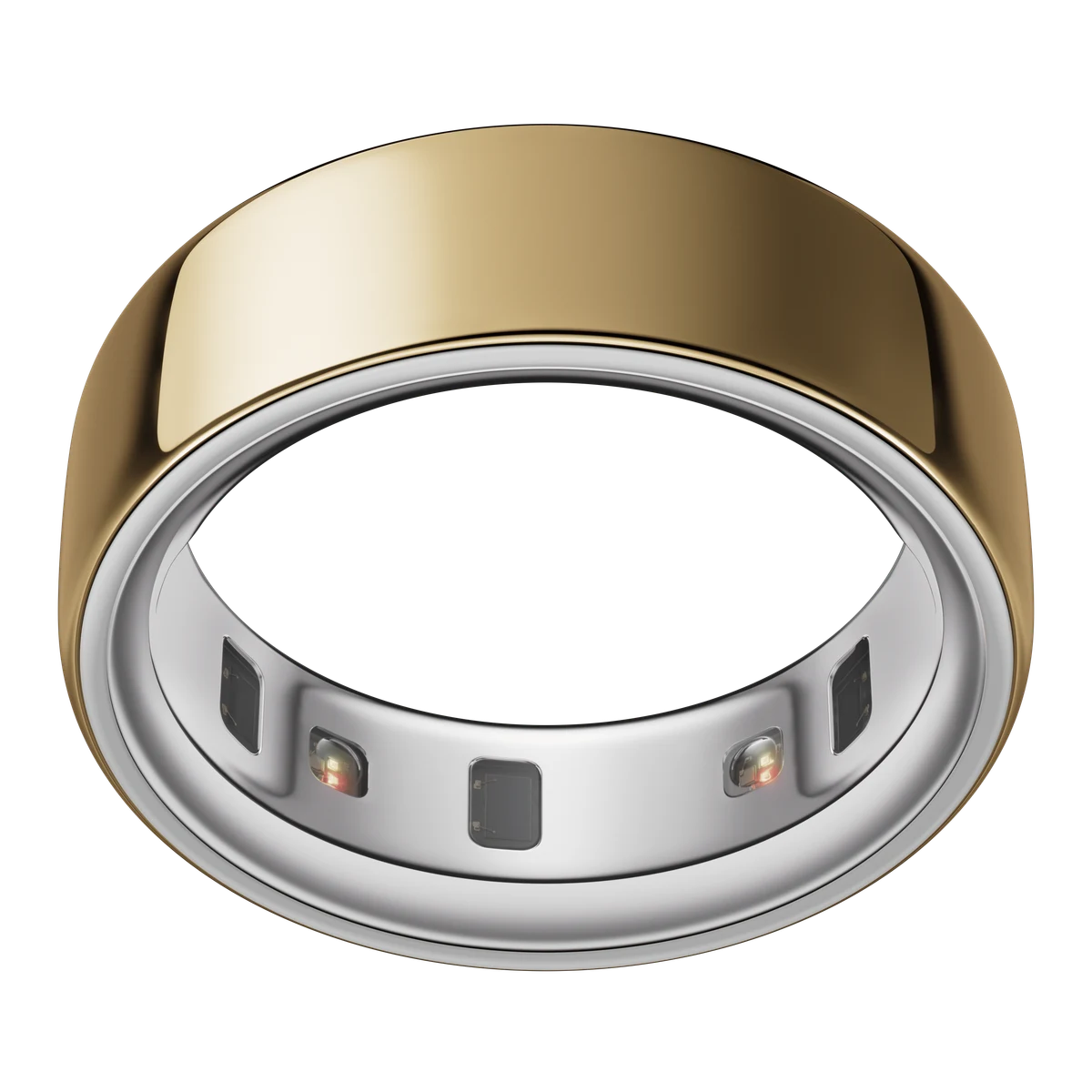 Oura Ring 4 ↗Full specificationsEstimate my cost → | 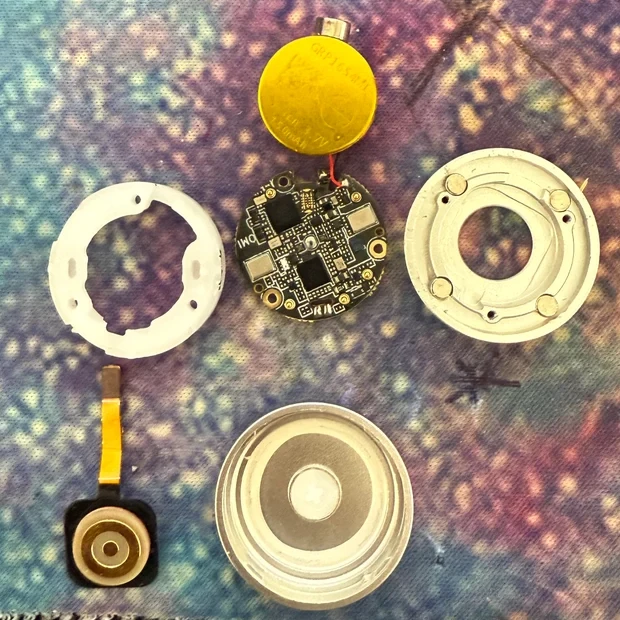 Omi CV1 (Consumer Version 1) ↗Full specificationsEstimate my cost → |
|---|---|---|
| Who it suits | Start here for a private journal or dashboard built from synchronized sensor-derived records. Our proposed weekly reflection page distinguishes a numeric score, a null value and an absent day before offering an optional reflective question. It is a data-integration project. | Start here when the project needs a custom workflow around conversations or a documented device SDK. Our first build imports one conversation into a review queue with evidence offsets, an unknown-owner state and explicit approval. Start with account records before attempting a new capture application. |
| What you can build first | Proposed first result: combine a daily sleep summary with a brief self-written journal entry, show missing days explicitly and let the user inspect changes over time. This can support reflection; it does not establish that one habit caused a score change or provide a medical diagnosis. Reflection dashboard build | Proposed first result: a review inbox that shows a suggested task beside the conversation evidence, with accept/edit/reject controls before export. A searchable personal conversation index is another possibility. Start with a scripted session containing corrections and unrelated conversation rather than treating every extracted task as a commitment. Task-review build |
| Device price | Current titanium Ring 4 checkout price is unverified; confirm the finish, size and current store offer. $349 is the historical launch starting price, not a current quote. Official launch · Ring 4 and current inventory | Current Omi advertising shows $129 promotional / $179 regular. Confirm the shipping revision is CV1 before treating this as its price; the offer does not establish exact revision availability. Promotion and checkout can change. Official Omi offer |
| Other setup costs | Example assumes a correctly sized charger, an existing compatible phone and an existing computer for a private local dashboard. Replacement chargers, ring finish upgrades and publicly hosted infrastructure are extra. The proposed build reads account data, not raw ring sensors. | Example assumes an existing compatible phone, supplied charger and a development computer. A hosted review queue or self-hosted transcription server adds infrastructure costs; neither is included. Confirm accessories with the exact CV1 offer. |
| Subscriptions and usage | Membership is required for this API-based project: $5.99/month or $69.99/year in the US. New members get the first month included. Without membership, API data access is unavailable. Optional model calls and a deployed backend are separate costs. Membership and API access | Free tier: unlimited on-phone transcription plus 300 cloud minutes/month. Optional Pro: about $270/year; official pages differ ($269 on pricing versus $269.91 in product FAQ), so confirm the app checkout. Monthly Pro is advertised at $29.99/month ($359.88 for 12 months). Third-party model/API and hosting costs are separate. Free and annual plans · Product plan FAQ |
| First-year build budget | Hardware quote + $65.89 membership during the first 12 months for a new member paying monthly (11 × $5.99). A full 12 paid months costs $71.88; an annual purchase costs $69.99. Annual coverage starts after the new-member trial, so the periods differ. Add any hosting or model usage. For illustration only, the historical $349 ring reference + a $69.99 annual purchase = $418.99, not a current checkout total. | After confirming CV1: hardware quote + $0 on the free tier, or quote + about $270 for annual Pro, or quote + $359.88 for 12 monthly Pro payments. Conditional example using the $129 promotion: $129 free-tier hardware baseline, about $399 with annual Pro, or $488.88 with monthly Pro. This excludes hosting/model fees and is not a verified CV1 checkout quote. |
| Price basis and date | USD · US membership · Checked 5 Nov 2026. Current titanium Ring 4 quote needed. | USD · Checked 5 Nov 2026. Promotion, CV1 revision and annual-plan amount need checkout confirmation. |
| Getting started and difficulty | First wear and sync the ring, then register an API application and implement OAuth2 for your own account. Request the minimum relevant data scope and display one returned day with its sync timestamp. Personal access tokens are no longer supported. Add webhooks and deletion controls after the first read works. Current API quick start | First confirm your hardware/firmware revision, record a short agreed session and inspect it in the app. Then use an owner Developer API key to read one conversation and its task candidates; keep credentials server-side. Add writes only after read-only review works. The API has endpoint-specific quotas and list freshness limits. Developer API |
| Capture and feedback | Optical, temperature and motion sensing produces data that later becomes app/account records. There is no camera, microphone or text display in this Ring 4 workflow. The wearer reads results on another device. Ring 4 hardware | CV1 has two microphones, local audio storage and Bluetooth. Its API exposes conversation records and transcript evidence; the Developer API does not expose audio downloads. CV1 differs from the retired DevKit 2. Hardware API boundary |
| AI location and data flow | The ring gathers signals; synchronized data is processed into records and scores available through the cloud API. A language-model reflection is an optional separate layer in your app. The project does not call Oura Advisor or assume access to its internals. Data lifecycle | The standard app route uses a companion and backend for transcription and generated records. A local raw-audio buffer does not establish offline AI. Alternative device SDK paths have different transcription dependencies. CV1’s Wi-Fi chip is documented as disabled in current firmware. Hardware and firmware |
| Setup, accounts and services | Titanium Ring 4, correctly sized charger, phone/app, account with required active membership, and a private backend. Register an OAuth2 application and obtain the owner’s daily-data consent. New API apps have a 10-user limit before approval. API access | CV1, charger, companion phone/app and an account for the standard route. The proposed review queue needs a server-held scoped developer key. Check current processing plan limits and any third-party model charges. A direct SDK build needs separate compatibility testing. |
| What developers can control | Read authorized records with Cloud API V2; use OAuth2 and the minimum scopes. Fetch a bounded date window, then handle updates. Sleep records require app sync, so your server cannot promise a fresh morning result on a timer. This is cloud-data access, not firmware control. API and sync | Two routes: use the Developer API for saved conversations, memories and tasks, or use a Bluetooth device SDK closer to capture. Open hardware files support study and modification. Keep API permissions, SDK audio formats and firmware version explicit. Developer API SDKs |
| Wear, power and availability | A finger-worn sensor with a separate charger and no screen to check during use. Fit, charging gaps and sync timing affect data continuity. This comparison covers titanium Ring 4, with no measured battery result from this lab. | A voice pendant with a documented 150 mAh cell. Capacity alone does not establish recording runtime or reconnect recovery. Test actual placement, clothing noise, phone connection and buffer behavior. Consumer design |
| First end-to-end test | Use seven-day fixtures with a null score, a missing day and duplicate records. Then verify consent, refresh and sync using the owner’s account. Reject invented dates, numbers or causal claims in any generated reflection; show the evidence next to it. | Use corrected, conditional and negated commitments. Preserve unknown speakers and deferred processing, re-import without duplicate cards, and interrupt Bluetooth for a controlled interval. Check the resulting evidence for gaps. Keep every external action behind a separate approval. |
| When to choose another route | Choose a camera or voice wearable for capturing what you see or say. Oura’s cloud API is not a raw optical-sensor stream or a way to install your own model on the ring. The proposed journal does not provide diagnosis or establish why a score changed. | Choose NotePin for the existing recording/export workflow if you want less capture-stack work. Choose Frame for a visual answer. Omi’s open hardware and SDKs still require integration work; they do not prove an all-day offline assistant or a production self-hosting service. |
| Proposed build | Build a weekly reflection journal from ring data → | Build a conversation-to-task review queue → |
Start where you can build
Frame exposes a programmable display. Meta supplies camera access to a companion app. Plaud and Omi offer different routes into recorded conversations. Oura exposes synchronized account records. Access to one layer does not grant access to firmware or the maker’s built-in assistant.
Budget beyond the device
Check phone compatibility, account eligibility, subscriptions, developer-preview terms and any AI-provider costs. Confirm original-model stock and support before buying. Newer generations can have different hardware and SDK support.
Follow one piece of data
Trace a capture through transfer, processing, your interface and deletion. Test a disconnect and a stale result. Keep bystander consent, third-party services and exported copies visible in your design. Start with fictional conversations and labels; use invented sensor records before connecting personal data.