Compare Adafruit AS7341 10-Channel Light / Color Sensor Breakout (4698) with Edge AI alternatives
Compare reflected light-band readings from small surface samples. Compare the complete setup, developer access and trade-offs before choosing your first build.
Motion and sensor AI: Thingy:53, Nano Sense Rev2 or Nicla Sense ME? →Adafruit AS7341 10-Channel Light / Color Sensor Breakout (4698)
For a maker studying color and illumination as compact sensor data.
Not a camera and not a chemical material identifier; a model runs off-sensor.
Hardware facts link to manufacturer documentation. Build fit is our editorial assessment. The linked hardware experiments are still unrun; synthetic code checks do not establish accuracy, speed, battery life or reliability on these devices.
Compare the whole build
Choose two products, or add a third. On a small screen, swipe across the table.
| What matters |  Adafruit AS7341 10-Channel Light / Color Sensor Breakout (4698) ↗Full specificationsEstimate my cost → | 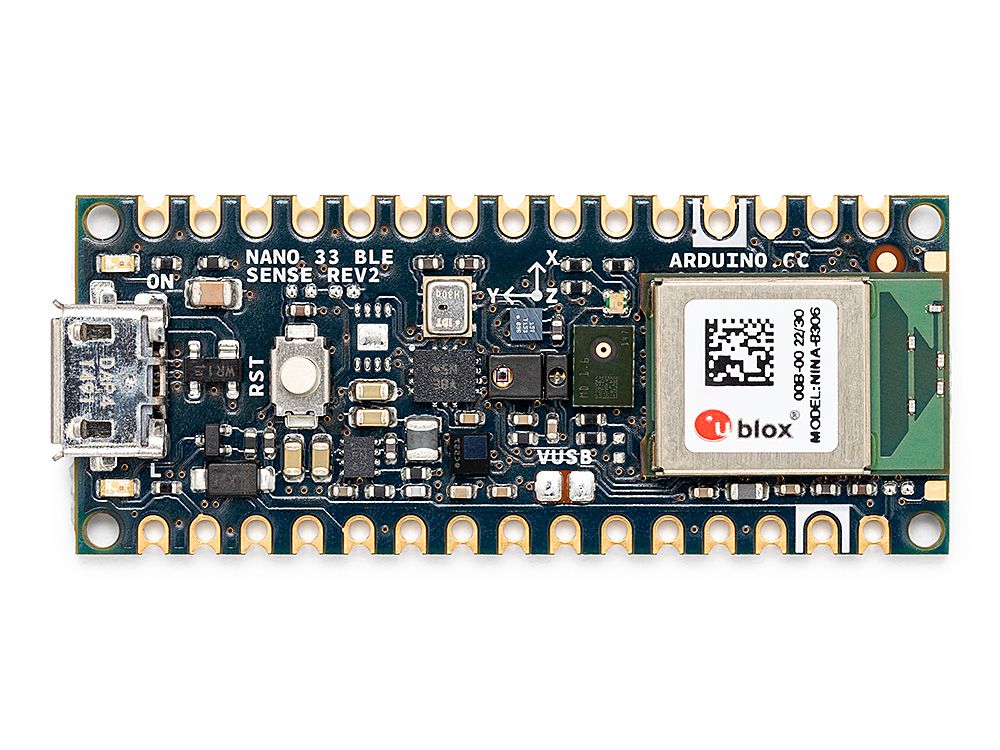 Arduino Nano 33 BLE Sense Rev2 ↗Full specificationsEstimate my cost → |
|---|---|---|
| Who it suits | For a maker studying color and illumination as compact sensor data. | Best fit: a learner or Arduino/C++ maker who wants to own the full small-model loop: collect motion or audio, train, export, modify the application and test a new wearer. Prefer Thingy:53 for an enclosed battery kit and phone-led first demo; prefer Nicla for Bosch sensor-hub outputs. This is an editorial assessment. |
| What you can build first | First observable result: connect product 4698 to a CircuitPython Feather RP2040 with a STEMMA QT cable, run Adafruit's AS7341 Python/CircuitPython example, and print the readings for the eight named visible bands plus clear and near-infrared. Compare a white card and a colored card under the same lamp and distance. Values should change; a missing I2C device or unchanged/saturated readings call for wiring, power, gain and lighting checks. The official guide uses a Feather M4 as its pictured example; using Feather RP2040's documented STEMMA I2C port is a supported board adaptation, not an Inside AI hands-on result. Build guide · Adafruit example Proposed next build, untested: collect labeled readings for two visually similar surfaces and train a small host-side classifier. Experiment | Proposed first result: distinguish two deliberate hand gestures from ordinary movement, then print the result over USB. A wearable shortcut, toy controller or simple sound classifier can follow. Start with one input stream and include a reject class; a convincing training demo is not evidence it works for another person. Gesture build |
| Device price | US$18.95 for Adafruit product 4698. | $39.70 with headers (ABX00070); $38.70 without headers (ABX00069). These are US Arduino Store prices, not a complete kit. With headers · Without headers |
| Other setup costs | US$11.95 Feather RP2040, $0.95 QT cable and $4.95 USB data cable for the example if not owned. | Allow $5–15 for a suitable data USB cable and basic bench accessories (editorial estimate). This gesture/sound prototype uses the onboard sensors and an existing computer. A battery, enclosure or extra sensors would be additional. |
| Subscriptions and usage | No plan or cloud fee for local readings; a later cloud classifier is separately charged. | $0 subscription budget for the proposed local inference build. Training on your own computer avoids a hosted training bill. Optional paid cloud tooling, team plans and storage are outside this example; check their terms separately. Edge Impulse Developer is $0/month for individual exploration/prototyping; Enterprise pricing is separate. Tool pricing |
| First-year build budget | US$36.80 conditional subtotal with an owned computer and the four listed new parts. | $44.70–54.70 = $39.70 ABX00070 + $5–15 cable/basic-mount allowance + 12 × $0 required service, with an existing computer/USB power. $39.70 if accessories are also reused. New computer and portable setup unquoted; tax, shipping, electricity and labor excluded. |
| Price basis and date | Adafruit US store, 25 Nov 2026. All four items listed in stock; delivery unconfirmed. Tax and shipping excluded. | 14 Nov 2026 · USD · US Arduino listings. ABX00070 available=true in official feed; checkout/delivery unverified. Accessories are editorial allowances. |
| Getting started and difficulty | Beginner CircuitPython/I2C work for the first reading, with a computer to edit code and view serial output. Install CircuitPython on the Feather RP2040, add Adafruit's AS7341 library and dependencies, connect the keyed QT cable, and use the Feather's STEMMA I2C bus. Set the USB cable's switch to Data before plugging it in. The official example may need its generic I2C initialization changed to board.STEMMA_I2C() for this host. Keep target distance and ambient light similar when comparing readings; later classification adds data collection and validation work. No setup duration or accuracy is claimed. AS7341 guide · Feather STEMMA port | Moderate for an Arduino/C++ beginner; more work for reliable recognition (editorial assessment). Install Arduino Mbed OS Nano Boards and Arduino_BMI270_BMM150 for Rev2, then upload SimpleAccelerometer. Success is a changing three-axis stream in Serial Monitor as you move the board. A charge-only cable or Rev1 sensor library can prevent that first result. No cloud account is required for this USB sensor check. Official accelerometer example Then collect labeled windows, use the supported Edge Impulse Rev2 deployment route, and test an untouched recording session. Hosted training requires an account/internet; inference runs on the board. Expect to learn dataset design, model export, memory limits and reject-state logic before adding BLE. No hands-on setup duration is claimed. Rev2 deployment guide |
| Input and output | Eight visible bands plus clear and near-infrared values over I2C. | Motion, microphone and environmental sensors → a class and confidence → GPIO or Bluetooth LE event. No built-in camera or Wi-Fi. Board documentation |
| Where the model runs | AS7341 measures light; Feather reads values; any classifier is host code. | The nRF52840 microcontroller runs the model. 64 MHz Cortex-M4F, 256 KB RAM and 1 MB flash must hold your application, buffers and model. Datasheet |
| Complete the setup | AS7341 breakout, compatible I2C host, QT cable, USB data cable and owned computer. | Board + USB data cable + computer for programming and data collection. For a wearable, add a suitable power supply, mounting and enclosure. A Pi is not required. |
| Path to a custom model | CircuitPython or Arduino driver; collect labeled examples before training. | Arduino C/C++ and a TinyML deployment workflow such as Edge Impulse. Collect labelled sensor windows, train off-device, check memory use, then flash the classifier. Use the Rev2 IMU library. |
| Power and portability | Powered through the host board for the documented starter. | A candidate for a compact sensor node. Battery life depends on sampling, inference, radio use and board configuration; measure current before choosing a battery. No battery-life result is available here. |
| First hardware test | Print channel values for white and colored cards under unchanged light and distance. | Hold out an entire person or recording session. Test normal movement as well as intended gestures. Count false events per hour and missed gestures, then measure current with Bluetooth enabled. |
| When to choose another route | Not a camera and not a chemical material identifier; a model runs off-sensor. | Choose a camera route for visual inspection. Choose Jetson for free-form language. A small sensor classifier does not understand arbitrary spoken instructions. |
Measure the application
For a counter, measure count error and delay. For a wearable, measure false triggers and current. For a language assistant, measure field accuracy and response time. TOPS ratings across different architectures, precision and sparsity settings do not answer those questions.
Price the complete setup
Include the host, sensors, storage, power supply, cooling, enclosure and model-development effort. A camera module, an accelerator board and a developer kit include different things. Check current regional prices with the makers before purchasing.
These can work together
A proposed robot could use Nano for motion events and Jetson for perception. A Pi can turn camera detections into dashboard events. Define timestamps, stale-data handling and the communication link before combining devices. Local inference still needs an explicit data-retention and network policy.